Tet in Vietnam is celebrated once a year, yet it unfolds in three remarkably different ways. The differences are not defined by temperature alone, but by centuries-old traditions shaped by agricultural rhythms, spiritual beliefs, and regional cultural heritage.
Tet in Northern Vietnam: Tradition at Its Deepest
Northern Vietnam, especially Hanoi and the Red River Delta, is considered the cradle of Tet in Vietnam. Here, preparation is almost ceremonial. Weeks before the Lunar New Year, local markets bloom with pale pink peach blossoms and meticulously shaped kumquat trees, symbols of renewal and prosperity unique to the North.
The air fills with the scent of incense and freshly boiled “bánh chưng”, square sticky rice cakes wrapped in dong leaves, often cooked overnight as families gather around crackling fires. Homes are arranged around ancestral altars, while elaborate “mâm cỗ” – offering trays reflect a deep sense of gratitude and remembrance. After Tet begins, pagodas grow crowded as families pray for harmony, health, and a successful farming year ahead. The atmosphere feels reverent, deliberate, and deeply rooted in tradition.
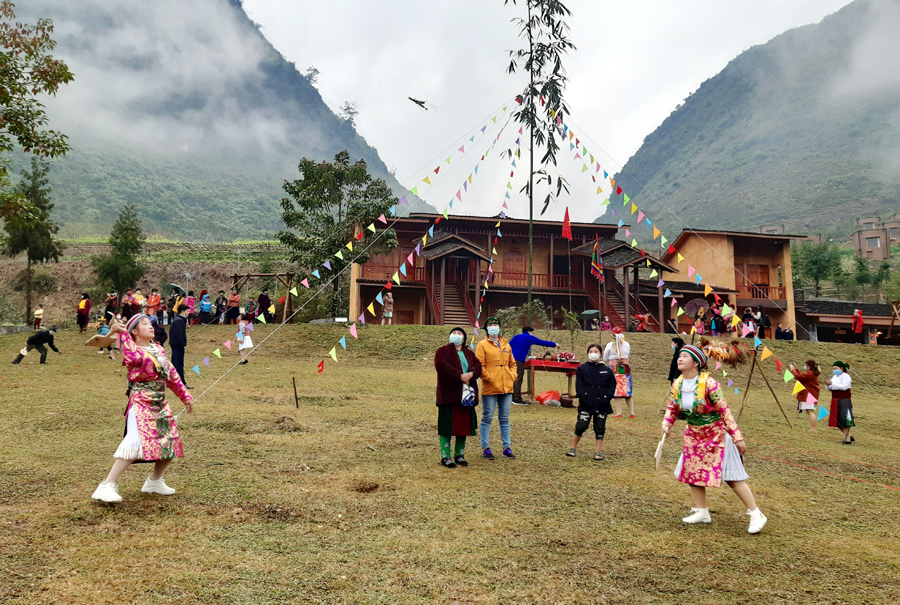
Beyond the cities, Tet in Vietnam takes on a different rhythm in the northern mountain regions. In places like Ha Giang, Hoang Su Phi, Bac Ha, or Sapa, Tet blends with the traditions of ethnic minority communities. Plum and peach blossoms scatter across stone houses and terraced hillsides. Villages come alive with traditional music, colorful brocade costumes, communal feasts, and local markets that feel more like reunions than commerce. Ancestor worship remains central, but celebrations are more communal, tied closely to nature, harvest cycles, and the mountains themselves. Here, Tet feels raw, intimate, and deeply connected to the land.
Villages come alive with traditional music, colorful brocade costumes (Cre: vietnamtourism.gov.vn)
Tet in Central Vietnam: Spiritual and Intimate
In Central Vietnam, Tet takes on a quieter, more introspective character. In Hue, the former imperial capital, the holiday carries a solemn elegance shaped by royal heritage. Cylindrical bánh tét, fermented pork, and simple home-cooked dishes replace the Northern feast.
The dragon dance troupe performs a welcoming ceremony as they pass through the gate of Ong Pagoda during the Tet Holiday. (Cre: vietnam.vnanet.vn)
Nearby Hoi An glows softly under lantern light, where family gatherings and temple visits take precedence over grand displays. The spiritual meaning of Tet in Vietnam feels intimate and restrained, with daily life resuming sooner after the holiday.
Tet in Southern Vietnam: Joyful and Vibrant
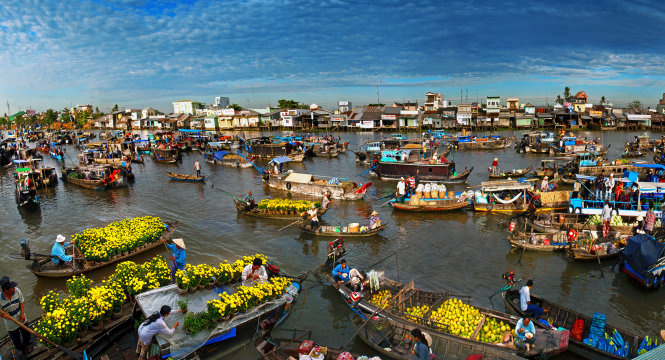
In Southern Vietnam, Tet is warm, lively, and spontaneous. Bright yellow mai blossoms dominate homes and streets, reflecting the tropical climate. Along the Mekong Delta, floating markets overflow with fruit, color, and laughter.
Celebration takes center stage. Rituals remain, but joy leads the way. With year-round farming, life returns to normal quickly after Tet, carrying forward the festive energy.
Along the Mekong Delta, floating markets overflow with fruit, color, and laughter. (Cre: Vietnam Online)
Planning Your Tet in Vietnam Journey
For the deepest cultural immersion, Northern Vietnam offers the most authentic Tet traditions. For sunshine and warmth, Central and Southern Vietnam combine heritage with tropical comfort:
☀️ 24–32°C winter weather ☀️ Hoi An lantern festivals and Hue imperial ceremonies ☀️ Mekong floating markets at dawn ☀️ Phu Quoc beach retreat after the celebrations