


The best time to visit the Mekong Delta is November to April – dry skies, calm waterways, and vibrant floating markets. If you want lush scenery and fewer crowds, September to November (the “floating season”) is a hidden gem. Every month has something to offer; this guide helps you pick the right one for your travel style.
The Mekong Delta doesn’t have a bad season, it has different seasons, each with its own character. The real question isn’t “when should I go?” but “what do I want to experience?” A floating market at dawn in February feels completely different from paddling through flooded rice fields in October. Both are extraordinary.
At Vietnam Responsible Tourism, we’ve been running community-based tours in the Delta since 2017. What follows is what we actually tell our guests — not a generic rundown of dry vs. rainy.
The Two Main Seasons at a Glance
Dry Season
November – April
Most popular. Clear skies, easier boat travel, peak floating markets. Best for first-time visitors. December–February is the sweet spot.
Rainy Season
May – August
Hot, lush, fewer crowds. Afternoon showers (usually 1–2 hours). Fruit orchards at peak harvest June–July. Budget-friendly.
Floating Season
September – November
The Delta fills with water. Breathtaking landscapes, abundant seafood, Khmer festivals. Our personal favourite for small-group tours.
Tet Holiday
Late Jan – Feb
Vietnam’s most vibrant cultural moment. Flower markets, family ceremonies, dragon boat races. Book accommodation 2–3 months ahead.
Month-by-Month Breakdown
| Month | Weather | Best for | Rating |
|---|---|---|---|
| Nov | 29°C, drying out | Floating season ends, early dry season begins | Excellent |
| Dec | 27°C, sunny | River cruises, cycling, Sa Dec flower village | Excellent |
| Jan | 26°C, coolest month | Floating markets, Tet prep, cultural visits | Excellent |
| Feb | 27°C, Tet season | Tet festival, flower markets, homestays | Excellent |
| Mar | 29°C, still dry | Early fruit harvest, trekking, bird sanctuaries | Very good |
| Apr | 34°C, very hot | Occasional rain starts; beat the heat with early starts | Good |
| May–Jun | 32°C, rains begin | Fruit orchards (mango, rambutan), budget travel | Good |
| Jul–Aug | 31°C, regular showers | Floating markets in full swing, lush scenery | Good |
| Sep–Oct | 30°C, high water | Floating season, Ooc Om Bok Festival, boat tours | Excellent (if you know why) |
The Case for September–November: The Floating Season
Most guides skip this period or list it as “rainy season — not recommended.” We disagree, and here’s why.
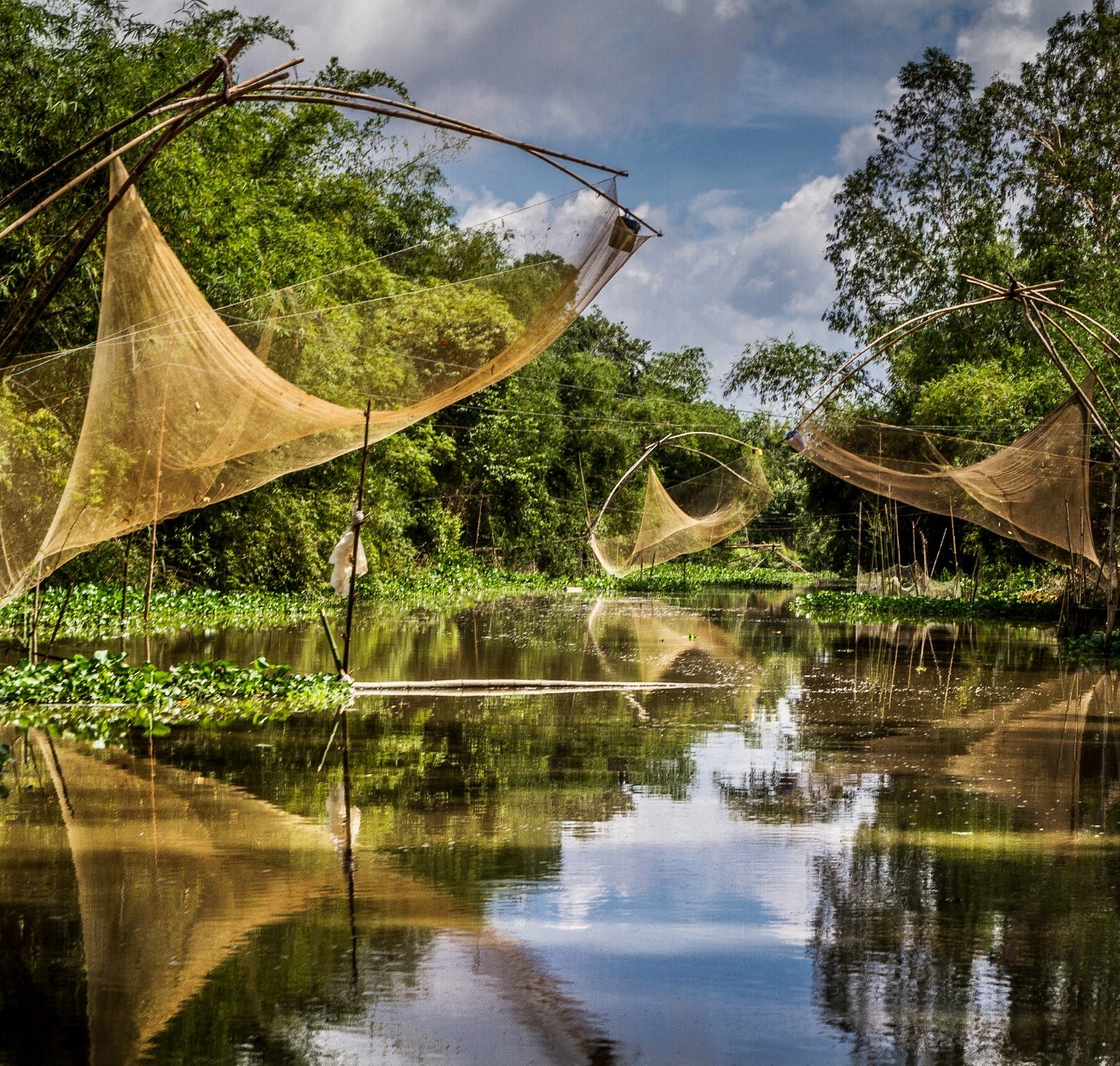
Between September and November, the Mekong River rises and spreads across low-lying fields. The Delta transforms into something otherworldly — flooded forests reflecting sky, lotus flowers pushing through still water, farmers navigating between paddies by small wooden boat. It’s the season local people actually live most fully — fishing with traditional traps, harvesting water lilies, cooking Linh fish soup and dien dien flower hotpot that only exist at this time of year.
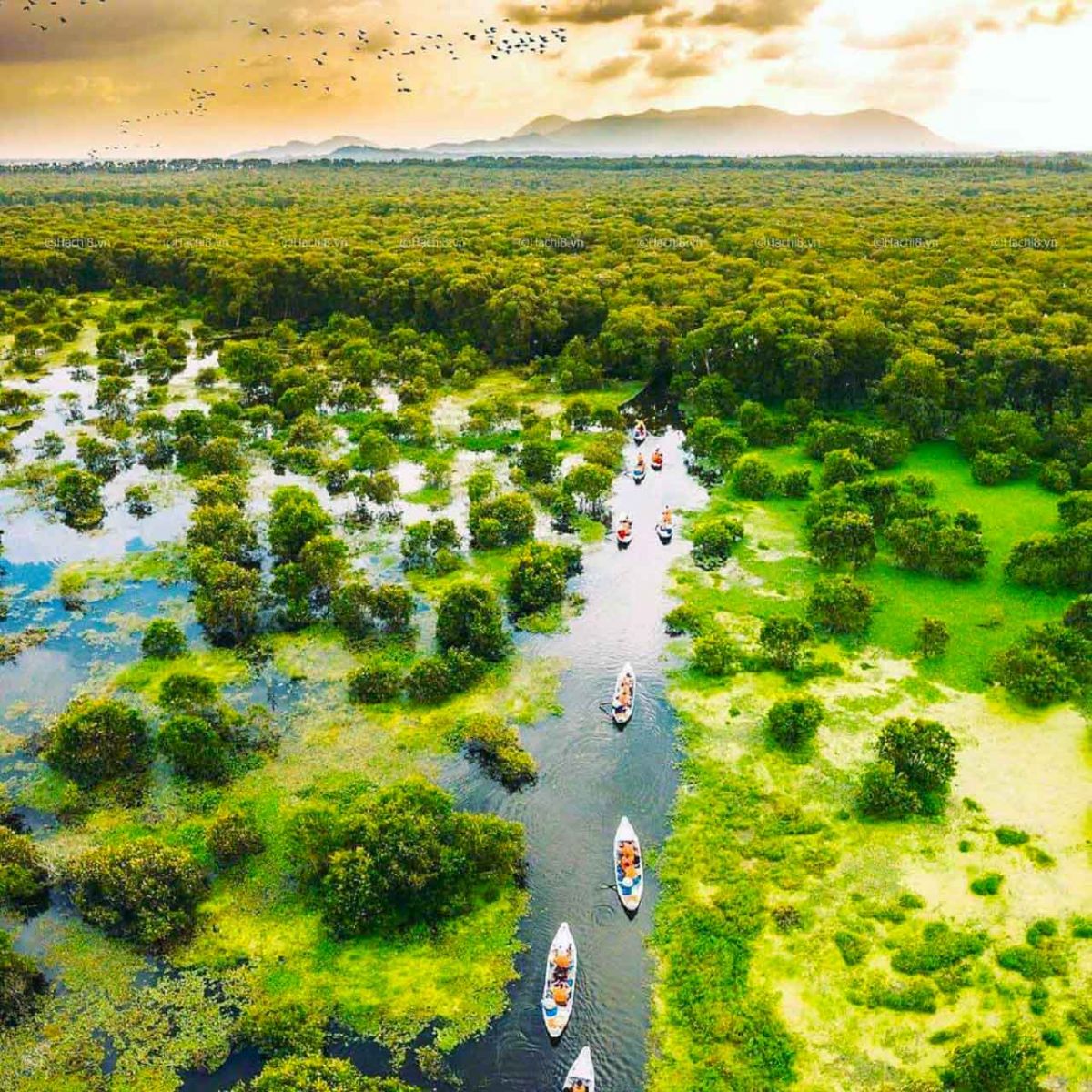
The Ooc Om Bok Festival (late October–November), celebrated by the Khmer community, features spectacular lit-boat processions along the river. It’s one of the most visually arresting things we’ve seen in the Delta — and almost no mass-market tour operators include it.
Responsible Tourism PerspectiveWhy timing your visit around the local calendar matters
When you visit during harvest season — whether that’s rice in November or mangoes in June — local families are working, not waiting for tourists. Joining a community homestay during harvest means you’re a guest in a functioning household, not a performance. You help shell lotus seeds, you eat what’s actually being cooked that week, and your money goes directly to the family rather than a tour aggregator. At VRTO, we structure our Mekong tours specifically around the agricultural and festival calendar of each community we partner with.
The Dry Season (November–April): Why It’s So Popular
The dry season earns its reputation. Skies are clear, humidity drops, and the waterways calm enough that even small wooden boats glide smoothly between canal villages. Floating markets like Cai Rang and Phong Dien are at their most photogenic — vendors stacking pomelos and dragon fruit high on rocking boats, the river gold at 6 a.m.
December to February is the peak of peak season. Temperatures sit around 26–28°C — the most comfortable in the year. If you’re visiting for the first time, or bringing children, or simply want reliable weather, this is your window.
A note on Tet (late January or February)
Tet is Vietnam’s most significant festival, and the Mekong Delta celebrates it with particular intensity — flower boat processions in Can Tho, yellow mai blossoms on every doorstep, families returning from the cities. If you’re visiting during Tet, plan around the periphery: the 3 days before and 3 days after the main holiday. On the exact holiday dates, many small businesses and family-run restaurants close. Book accommodation 6–8 weeks ahead.
In 2026, Tet begins on February 17.
What Responsible Travelers Should Consider When Choosing Timing
Beyond weather, there are two questions worth asking that most travel guides ignore:
How many other tourists will be there? The dry season brings the most visitors. At Cai Rang floating market during peak December–January, large groups arrive by speedboat from Can Tho, vendors switch to performance mode, and the authenticity fades. If you go in October or early November — or even late April — you’re more likely to find markets operating as markets, not as attractions.
What does your visit support? If you stay in a community homestay during the rainy season, you’re providing income during a period when tourism revenue drops sharply. For families who host guests as a supplement to farming income, an off-peak visitor can be more meaningful than a peak-season one.
Practical Tips for Each Season
What to pack for the dry season
- Light cotton or linen — temperatures feel hotter near the water
- Sun hat and reef-safe sunscreen
- A light layer for evenings (December–January can dip to 22°C at night)
- Reusable water bottle — single-use plastic is a serious problem in the Delta
What to pack for the rainy / floating season
- Quick-dry clothing — you will get wet, and that’s fine
- Waterproof sandals or river shoes
- Lightweight rain poncho (more practical than an umbrella on a boat)
- Insect repellent — mosquito density increases with standing water
Frequently Asked Questions
Plan a Mekong Delta trip around the right season for you
We build small-group and private itineraries timed around local harvests, festivals, and community schedules — not just peak tourist windows.